TPO Roofing vs PVC Roofing: Which is Better for Los Angeles Buildings?
When it comes to commercial roofing in Los Angeles, two materials dominate the conversation: TPO (Thermoplastic Olefin) and PVC (Polyvinyl Chloride). Both have earned strong reputations for durability, energy efficiency, and weather resistance—but which one is the smarter choice for your building?
At Duraroof Solutions, we’ve installed and repaired countless flat and low-slope roofs across Los Angeles. We’ve seen firsthand how TPO and PVC perform under local conditions—scorching heat, occasional heavy rain, and long exposure to UV rays. If you’re comparing TPO vs PVC roofing, here’s what you need to know before making a decision.
Understanding TPO Roofing
TPO roofing is a single-ply membrane made from a blend of polypropylene and ethylene-propylene rubber. It’s been gaining traction over the last two decades because it offers impressive energy efficiency and a lower upfront cost compared to other commercial roofing options.
Key Benefits of TPO Roofing:
- Reflectivity: TPO membranes are bright white, reflecting sunlight and reducing heat absorption. That makes them ideal for Los Angeles, where cooling costs can skyrocket during the summer.
- Energy Efficiency: The reflective surface helps keep interior temperatures lower, reducing strain on HVAC systems.
- Cost-Effective: TPO generally costs less to install than PVC while offering comparable performance in many applications.
- Durability: Modern TPO membranes resist dirt, bacteria, and UV radiation.
- Environmentally Friendly: TPO is 100% recyclable and doesn’t contain chlorine or plasticizers found in other materials.
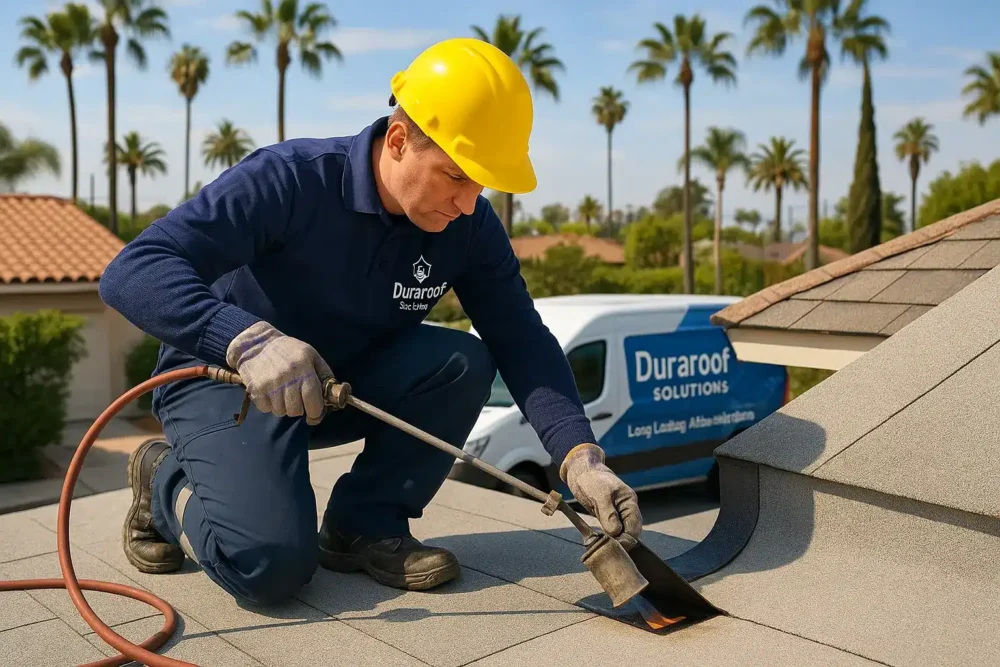
However, not all TPO membranes are created equal. Early versions had issues with seam failures and heat degradation, but today’s formulations are much stronger. The key is choosing a reputable installer—like Duraroof Solutions—who works with proven materials and proper heat-welding techniques.
Understanding PVC Roofing
PVC roofing is another single-ply membrane made from polyvinyl chloride. It’s been used for commercial roofs for over 50 years and has a long track record of reliability, especially in demanding environments.
Key Benefits of PVC Roofing:
- Chemical Resistance: PVC stands up to grease, oil, and chemical exposure, making it ideal for restaurants, factories, and industrial buildings.
- Proven Longevity: Many PVC roofs last over 25 years with minimal maintenance.
- Strong Seams: The seams are hot-air welded, forming a watertight bond that’s often stronger than the membrane itself.
- Fire Resistance: PVC is inherently fire-retardant, adding an extra layer of safety for commercial buildings.
- UV Stability: It performs exceptionally well under intense sunlight—a big plus for the Los Angeles climate.
The trade-off? PVC tends to be more expensive upfront than TPO. It’s also less environmentally friendly since it’s made with chlorine and can release harmful compounds when burned.
TPO vs PVC Roofing: A Side-by-Side Comparison
| Feature | TPO Roofing | PVC Roofing |
| Cost | More affordable | Higher initial cost |
| Energy Efficiency | Excellent reflectivity | Excellent reflectivity |
| Durability | Good, but varies by manufacturer | Proven long-term durability |
| Chemical Resistance | Moderate | Excellent |
| Flexibility | More flexible in cold conditions | Can become brittle with age |
| Environmental Impact | Eco-friendly and recyclable | Contains chlorine; less eco-friendly |
| Fire Resistance | Moderate | Strong fire resistance |
| Longevity | 15–25 years | 20–30+ years |
What’s Best for Los Angeles Buildings?
The answer depends on your building type, budget, and exposure conditions.
- For standard commercial buildings (like offices, retail spaces, and warehouses), TPO roofing is often the better value. It offers significant energy savings, reliable waterproofing, and a lower installation cost—perfect for Los Angeles’ sunny climate.
- For restaurants, industrial facilities, or buildings exposed to oils or chemicals, PVC roofing is the safer choice. Its superior chemical and fire resistance can extend roof life and reduce risk in more demanding environments.
Both systems perform well under LA’s hot, dry weather. The real difference comes down to specific needs and the quality of installation. A poorly welded seam or low-grade membrane can shorten the life of either system, no matter how good the material is on paper.
Duraroof Solutions: Your Trusted Roofing Partner in Los Angeles
Choosing between TPO and PVC roofing isn’t just about comparing materials—it’s about finding the right partner to install and maintain it properly. At Duraroof Solutions, we bring decades of combined experience and a commitment to quality without compromise.
Here’s what sets us apart:
- Expert Craftsmanship: Our skilled team knows the unique challenges of Los Angeles roofs—from extreme UV exposure to seismic movement.
- Top-Tier Materials: We source premium membranes from trusted manufacturers for long-lasting performance.
- Energy-Smart Solutions: We help building owners cut cooling costs while extending roof life.
- Transparent Pricing: You’ll get clear, competitive quotes—no surprises, no shortcuts.
Whether you’re installing a new flat roof or replacing an aging system, we’ll walk you through every step, explaining which option—TPO or PVC—best fits your goals and budget.
Final Thoughts
When it comes to TPO vs PVC roofing, both are excellent choices for commercial properties in Los Angeles. TPO shines for cost-conscious owners focused on energy savings, while PVC stands out for buildings needing maximum durability and chemical resistance.
The real key is working with a team that understands both materials inside and out. At Duraroof Solutions, we don’t just install roofs—we build systems designed to perform for decades.
If you’re ready to upgrade your commercial roof, contact Duraroof Solutions today for a free consultation. We’ll help you choose the roofing solution that delivers the best protection, value, and performance for your Los Angeles property.