When it comes to protecting your commercial property in Los Angeles, the roof is your building’s first line of defense. Selecting the right material for your low-slope or flat roof is a critical decision that impacts long-term costs, energy efficiency, and durability. Two of the most common and robust options on the market today are Thermoplastic Polyolefin (TPO) and Modified Bitumen (Mod-Bit).
DuraRoof Solutions, with decades of local experience in roof repair, replacement, and maintenance across Los Angeles, understands the unique challenges that Southern California elements pose to commercial roofing systems. We’re here to provide a detailed comparison of these two materials—including their composition, cost, lifespan, installation, and best use cases—to help you choose the best flat roof for your business.
Material, Composition, and Performance
The primary difference between TPO and Modified Bitumen starts with their composition.
- TPO Roofing: This is a single-ply synthetic membrane known for its heat-welded seams, which create an incredibly strong, monolithic, and watertight barrier. TPO is a popular choice due to its natural reflective white color, offering high solar reflectivity that helps keep the building cooler, which is a major benefit in the intense Los Angeles heat. The material is also inherently flexible and resistant to tears, punctures, and dirt build-up.
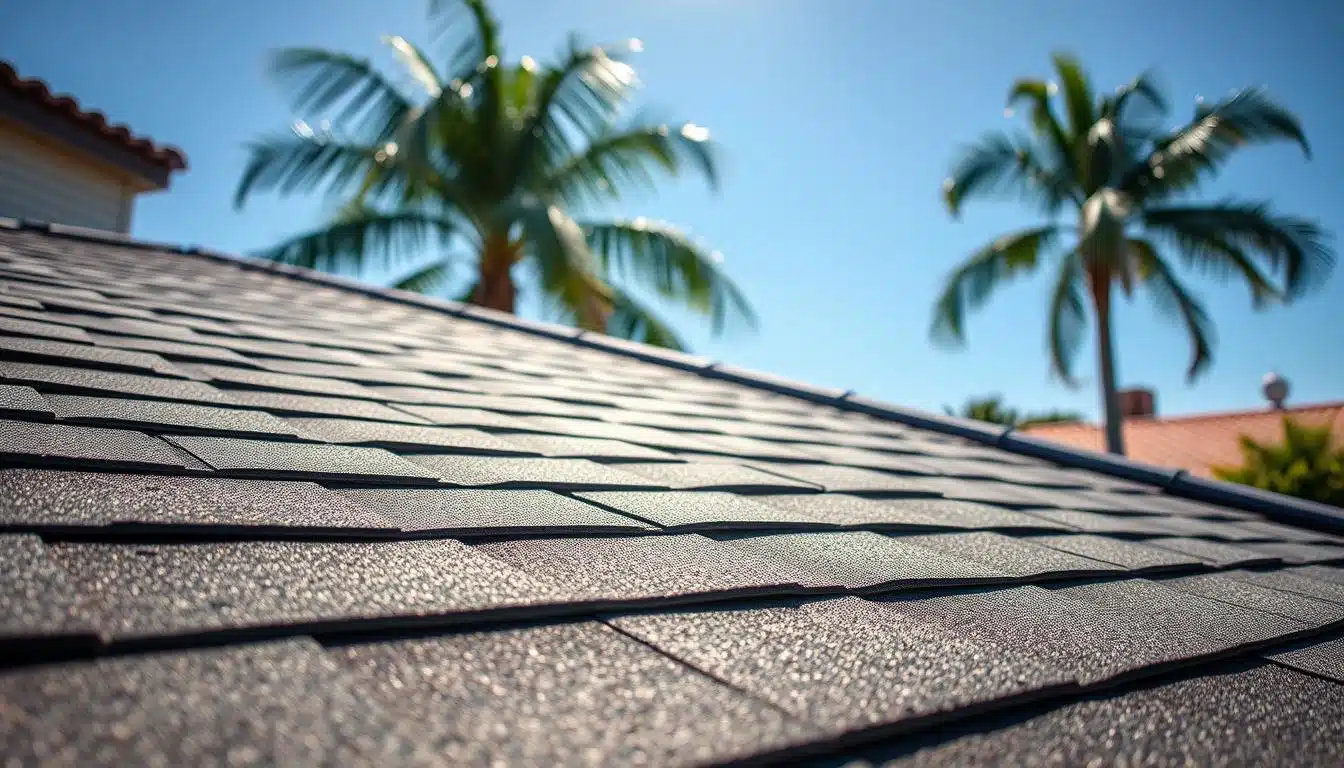
- Modified Bitumen Roofing: Often called “Mod-Bit,” this is an asphalt-based material, essentially an evolution of the traditional Built-Up Roofing (BUR) system. It is composed of asphalt combined with modifiers (such as polymer-modified asphalt) and reinforced with fiberglass or polyester mats. Mod-Bit is typically installed in layers, giving it exceptional waterproofing capabilities and resilience.
Cost and Long-Term Value
The upfront cost of a roofing system is always a consideration for commercial property owners.
- TPO Cost: TPO is generally considered one of the most cost-effective single-ply membrane materials available. Its light weight and relative ease of installation often translate into lower labor costs. Furthermore, the energy savings resulting from its reflective surface can lead to a lower total cost of ownership over the roof’s lifetime, especially in warm climates like Los Angeles.
- Modified Bitumen Cost: Mod-Bit is a reliable mid-range option. While the material cost can be comparable to TPO, the multi-layer installation process is typically more labor-intensive, which can increase the overall project cost. However, its long history of performance and robust construction offers excellent value and minimizes the risk of early leaks.
Lifespan and Durability
Both TPO and Modified Bitumen offer strong longevity, but their expected lifespans are achieved through different means.
- TPO Lifespan: A properly installed TPO roof can be expected to last between 15 to 20 years, and often longer. Its primary advantage in terms of durability is its seam strength and flexibility, allowing it to easily handle building movement and temperature fluctuations without cracking.
- Modified Bitumen Lifespan: A multi-ply Mod-Bit system typically offers a similar lifespan of 15 to 20 years. Its durability comes from its layered construction, which provides redundancy in waterproofing. While its surface is less reflective than white TPO, the asphalt composition is tough and resistant to foot traffic and mechanical damage.
Installation Differences
The installation process is a key distinction between the two, which impacts both project duration and safety.
- TPO Installation: TPO is installed in large rolls that are mechanically fastened or fully adhered to the roof substrate. The sheets are then fused together at the seams using a specialized hot-air welder, creating a bond that is stronger than the membrane itself. This method is clean, quick, and generally flame-free, making it a safer option for occupied commercial buildings.
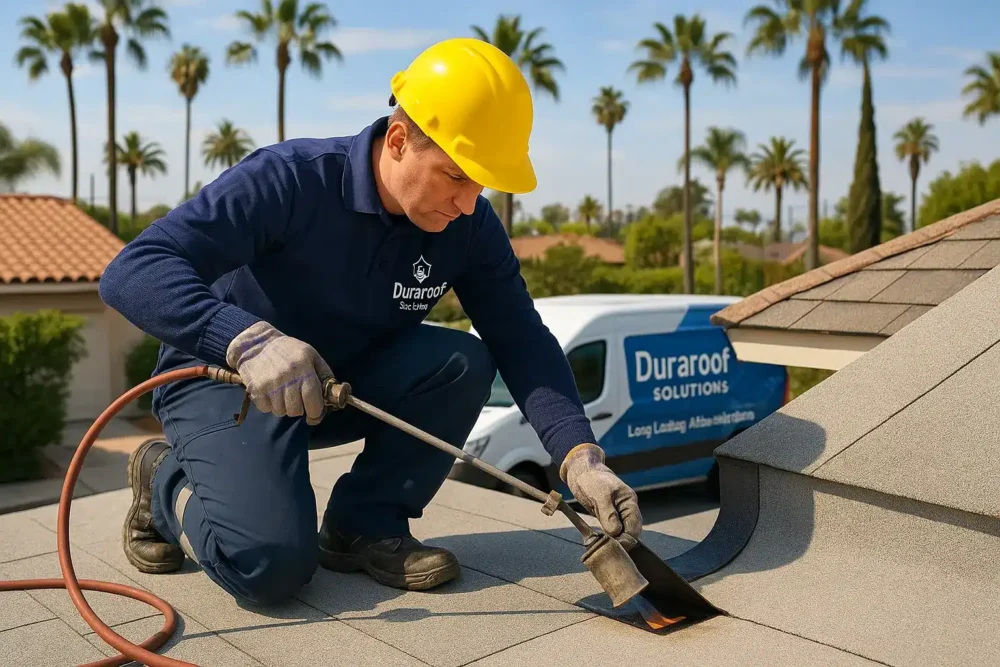
- Modified Bitumen Installation: Mod-Bit historically involved the use of a torch for heat-welding the sheets (a process known as ‘torch-applied’). However, for enhanced safety, many Los Angeles contractors now prefer safer application methods, including peel-and-stick self-adhering sheets or cold-applied adhesives, which eliminate the fire risk associated with torches.
Climate Performance in Southern California
For businesses in Los Angeles County, climate performance is paramount.
The high heat and intense sun of Southern California favor roofing systems with excellent thermal properties. TPO’s highly reflective surface (often white) excels at deflecting UV rays and heat, which can substantially reduce air conditioning costs and mitigate the “urban heat island” effect. While Modified Bitumen can be topped with a reflective coating or granules to improve its solar performance, TPO is inherently more energy-efficient for cooling from the start. Both materials are excellent waterproofing solutions, crucial for protecting your property during occasional heavy winter rains.
Partner with the Trusted Los Angeles Roofers
Choosing between TPO and Modified Bitumen means weighing energy efficiency against robust, layered construction. The right solution is the one that is perfectly tailored to your commercial building’s specific structure, budget, and local environment.
DuraRoof Solutions provides affordable, high-quality roofing solutions. Whether you’re dealing with an aging roof, storm damage, or a leak, our licensed and insured team is equipped to provide expert roof repair, roof replacement, and maintenance. We guarantee lasting results and outstanding customer service every step of the way. We proudly serve all of Los Angeles County, including Beverly Hills, Culver City, and West Hollywood.
Contact the trusted Los Angeles roofers at DuraRoof today to schedule your free roof inspection and determine the ideal flat roofing solution for your property.