In commercial roofing, TPO (thermoplastic polyolefin) has become an increasingly popular choice for its durability, energy efficiency, and overall cost-effectiveness. But one of the most common questions we get from clients considering TPO for their building is: How long does a TPO roof actually last? As a leading commercial roofing contractor serving the Greater Los Angeles area, Duraroof provides expert, in-depth insight into the lifespan and long-term performance of TPO roofing systems.
Average Lifespan of TPO Roofing
Under normal conditions, with proper installation and diligent maintenance, a TPO roof can last 15 to 20 years before requiring replacement. This service life is robust and often exceeds that of traditional roofing materials. Furthermore, reputable manufacturers often offer extended warranties, with some premium TPO membranes guaranteed for up to 30 years. It is essential to understand that this lifespan is an average, and several key factors can significantly affect the service life of your specific TPO roof.
Factors Affecting TPO Roof Longevity
The actual lifespan of your TPO system is a direct result of several variables:
- Installation Quality
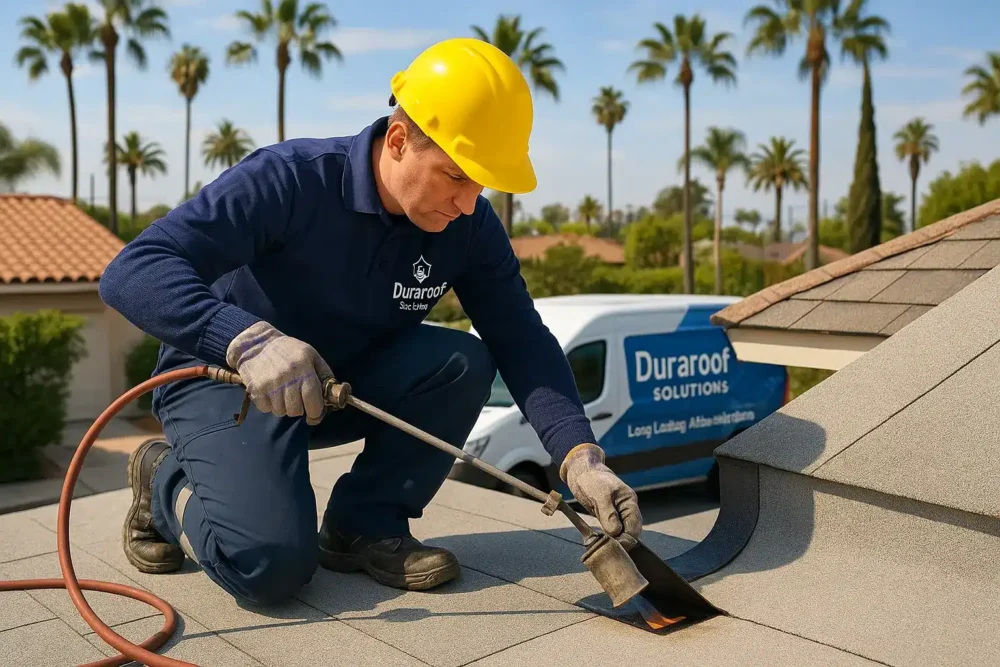
Proper installation is, without a doubt, the single most critical factor for maximizing the lifespan of a TPO roof. This requires technical expertise in several areas. All seams must be heat-welded correctly to ensure a permanent, watertight, and monolithic bond—a failure point for less experienced installers. Furthermore, all flashing details around penetrations (vents, pipes, HVAC units) must be properly addressed, and the substrate beneath the membrane must be adequately prepared and smooth. Hiring a reputable, experienced commercial roofer like Duraroof ensures the job is done right the first time, laying the foundation for long-lasting performance and maximum warranty coverage. - Climate and Weather Exposure
Here in Los Angeles, our roofs face intense UV exposure and high temperatures, which are major factors in the degradation of most roofing materials over time. TPO is formulated with UV stabilizers and is highly reflective, meaning it handles sun exposure exceptionally well compared to many other single-ply membranes. However, extreme weather events like large hail, high winds, and continuous, rapid temperature fluctuations (freeze-thaw cycles) can accelerate wear and tear. Annual inspections are vital to catch and repair weather-related damage early, before it can compromise the underlying structure. - Maintenance and Repair
Routine, proactive maintenance is absolutely key to extending the TPO lifespan well into the 20-year range. A robust maintenance plan involves:- Clearing debris, leaves, and dirt that can trap moisture and promote organic growth.
- Fixing punctures, tears, or membrane damage promptly to prevent water infiltration.
- Resealing or re-welding problematic seams or flashing areas that show signs of stress.
We recommend twice-yearly professional inspections and quick, quality repairs to optimize TPO performance and safeguard your investment over the long haul.
- Membrane Thickness
TPO membranes are available in various thicknesses, typically 45-mil, 60-mil, and 80-mil. Thicker membranes provide inherently greater durability, offering enhanced impact resistance, puncture protection, and a larger reserve of material to resist weathering and erosion. For long-term applications and high-traffic roofs, 60-mil and 80-mil are the most common and recommended choices as they are more likely to reach the upper end of the expected lifespan. Duraroof can help you choose the optimal product thickness for your specific operational needs and budget. - Roof Slope and Drainage
Proper slope and drainage are essential to prevent ponding water—water that remains on the roof for more than 48 hours. Ponding water can accelerate the degradation of any roofing membrane, including TPO. Flat or low-slope roofs are most vulnerable to this issue. If your building has a flat roof, ensure your roofer designs and implements adequate interior drains, scuppers, and a slight pitch to optimize TPO lifespan by quickly and effectively removing all water.
Advantages of TPO Roofing
In addition to its excellent 15-20+ year average lifespan, TPO offers several other functional and financial benefits that make it a smart choice for commercial property owners:
- Superior Resistance: Strong resistance to UV rays, high heat, common commercial chemicals, and punctures.
- Watertight Seams: The heat-welded seams create a permanent, molecular, watertight bond that is stronger than the membrane itself, minimizing seam failure.
- Energy Efficiency: Its highly reflective, white surface dramatically reduces solar heat gain, which can lower your building’s cooling costs and contribute to mitigating the urban heat island effect.
- Versatility: TPO is lightweight, flexible, and versatile, making it suitable for use on a wide variety of commercial roof types and geometries.
- Cost-Effective: It offers a favorable balance of performance and price, being generally more cost-effective than materials like PVC and competitive with other single-ply membranes like EPDM.
Maximizing Your TPO Roof Lifespan
With expert installation and diligent maintenance, facility managers can easily optimize the service life of a TPO roof and aim for the 25 to 30-year range. Duraroof highly recommends following this best-practice checklist:
- Installer Certification: Use a reputable, manufacturer-certified TPO installer to ensure adherence to strict installation standards and to validate the warranty.
- Optimal Thickness: Opt for thicker 60-mil or 80-mil membranes for enhanced long-term durability and protection.
- Scheduled Inspections: Schedule professional inspections and maintenance semi-annually (spring and fall) to identify potential issues before they become major problems.
- Immediate Repairs: Repair any punctures, tears, or flashing gaps immediately upon detection to prevent critical leaks and substrate damage.
- Drainage Care: Regularly clear roof drains, gutters, and scuppers of debris to ensure excellent, rapid drainage and prevent ponding water.
- Surface Cleaning: Periodically remove debris, standing dirt, and power wash the membrane to maintain its high solar reflectivity.
While TPO roofs have a reliable average lifespan of 15–20 years, proactive facility managers can achieve or exceed the upper end of that range through quality installation and consistent care. As your local TPO roofing experts, Duraroof is here to help you maximize the lifespan of your commercial roof. From material selection and expert installation to ongoing maintenance and repair, our experienced team can optimize your TPO system for decades of leak-free, energy-efficient performance. Contact us today to discuss your TPO roofing needs and secure your building’s future.